> ## Documentation Index
> Fetch the complete documentation index at: https://v0.x-docs.novu.co/llms.txt
> Use this file to discover all available pages before exploring further.
# Trigger Event Lifecycle
> Managing Trigger Events from Request to Processing
## Trigger Request
A trigger request is the initial step in handling a trigger event. It contains crucial details such as the template identifier, a list of subscribers who will receive the notification, the payload of the notification, and any overrides that need to be applied.
## Trigger Endpoint
Upon sending the request to the `/event/trigger` endpoint, a series of essential steps are initiated:
1. **Subscriber Mapping and Validation:** The first step involves mapping and validating the subscribers for the specified event. This ensures that notifications are sent to the correct recipients.
2. **Template Validation:** Following subscriber validation, the template associated with the event is validated. This validation process considers factors such as the active status or draft template flag to determine if it meets the necessary criteria for processing.
3. **Attachment Upload:** Once the validation process is successfully completed, any attachments associated with the event are uploaded to the designated storage service.
4. **Event Queuing:** The trigger event, now enriched with mapped subscribers and attachment links, is appended to the **trigger event queue**. This queuing mechanism optimizes response times, ensuring efficient event processing.
## Trigger Event Processing
When an event is picked up by the **trigger queue worker**, the processing phase begins. Here's what happens:
* **Notification Entity Creation:** For each subscriber listed in the trigger event, a corresponding notification entity is created. This entity contains essential data related to the organization, template, subscriber, and event payload.
* **Job Creation:** Based on the notification template's defined steps, jobs are generated. These jobs are responsible for carrying out specific tasks related to the event notification. Additionally, the notification entity is updated with a "channels" field generated from these steps, indicating the communication channels through which notifications will be sent.
## Jobs
Jobs play a pivotal role in the trigger event lifecycle. They are created based on the steps outlined in the notification template. Depending on the presence of a digest step, the following logic is applied:
* **Digest Step:** If the template includes a digest step, filtering logic is applied to produce an appropriate array of jobs. This logic differentiates between two types of digesting: **regular** and **backoff**, each serving distinct purposes in event processing.
## Job Statuses
| Status | Description |
| ------------- | ---------------------------------------------------------------------------------------------------------------------------------------------------------------------------------------------------------------------------------------------------------------------------------------------------------------------------------------------------------------------------------------------------------------------------------------------------------------------------------------------------------------------------------------------------- |
| **PENDING** | This status is assigned to a job before it is added to the worker queue. It indicates that the job is waiting to be processed. |
| **QUEUED** | After the initial validation and just before adding a job to the worker queue, it is set to `QUEUED`. This status signifies that the job is ready for processing but is awaiting its turn in the queue. |
| **RUNNING** | When a job is picked up by a worker from the queue, its status is changed to `RUNNING`. This indicates that the job is currently being processed by a worker. |
| **COMPLETED** | Once a job has been successfully executed and processed, its status is changed to `COMPLETED`. This signifies that the job has been successfully completed. |
| **FAILED** | If a job encounters an issue during processing or execution, its status is changed to `FAILED`. This indicates that the job has not been successfully completed, and there may have been errors or problems during processing. |
| **DELAYED** | The `DELAYED` status is applied to specific types of jobs, such as `digest` or `delay` jobs, to indicate that they are delayed and not immediately processed. For `digest` jobs, it means that the digesting process is running or scheduled for a later time. For `delay` jobs, it signifies that the job is set to be executed at a specified delay time. |
| **CANCELED** | When a job is canceled for any reason, its status is set to `CANCELED`. This indicates that the job will not be processed further and is effectively removed from the processing queue. |
| **MERGED** | The `MERGED` status is assigned to events that are part of a `digest`. It indicates that an event will be merged into the digesting event. In a digesting process, there is typically a primary or initial event that serves as the digesting event, and subsequent events are merged into it. Instead of having a separate `COMPLETED` status for these merged events, they are marked as `MERGED` to indicate their specific role in the digesting process. |
| **SKIPPED** | The `SKIPPED` status is used in the context of backoff versions of digesting. In this scenario, the first event's digesting is skipped, and the second event takes on the digesting role. The `SKIPPED` status is applied to the first event's digesting, indicating that it was intentionally skipped in the digesting process. Subsequent events may be merged into the second event's digesting process, as explained with the `MERGED` status. The `SKIPPED` status helps differentiate the skipped event from others in the digesting sequence. |
**Example:**
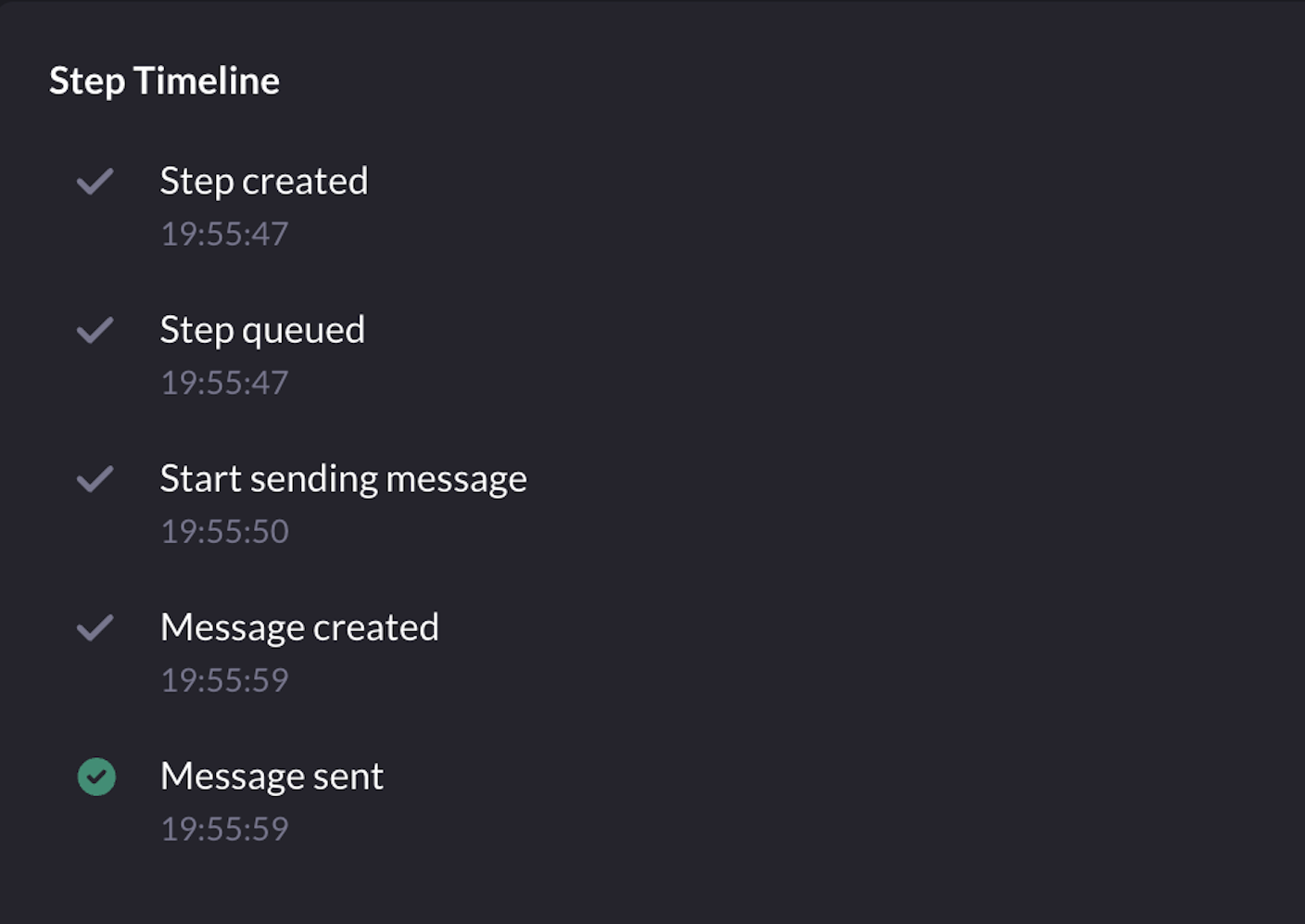 `PENDING`
`QUEUED`
`RUNNING`
`RUNNING`
`COMPLETED`
`PENDING`
`QUEUED`
`RUNNING`
`RUNNING`
`COMPLETED`